
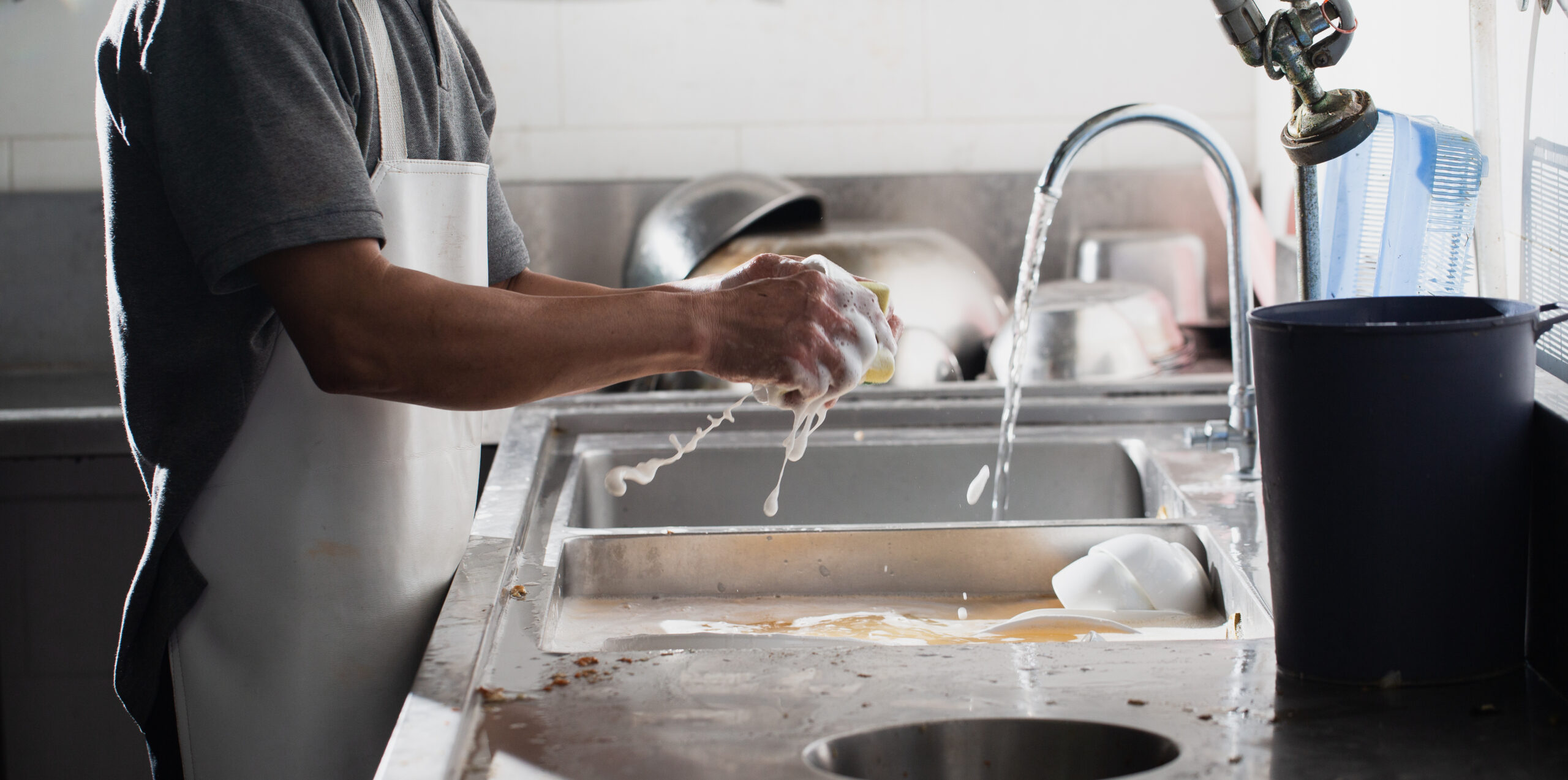
Washing dishes might seem like the most basic task – grab a sponge, add some soap, rinse,
repeat. But whether you’re running a restaurant, managing a guesthouse, or simply doing
the dishes at home or in the office, it’s more than just a routine chore. Sure, restaurants may
have industrial dishwashers, but not everything belongs in those stainless steel saviours –
bulky pots often don’t fit, and delicate glasses or fine crockery can easily get damaged. The
same goes for domestic dishwashers. And for the rest of us without one? It’s all elbow
grease and diligence.
The point is: no matter where you are, clean dishes are non-negotiable – for hygiene, for
appearance, and for keeping harmful bacteria at bay. So, let’s talk about why it really
matters.
“Dishes that aren’t washed properly can carry bacteria like E. coli or Salmonella, which can
lead to foodborne illnesses, sometimes serious ones,” warns Jeffery Madkins, Marketing
Manager for Unilever Professional. “Leftover food particles, grease, and even soap residue
(when not rinsed properly) can all create the perfect environment for germs to thrive. And
stacking dishes too tightly while they’re still wet? That’s a recipe for trouble – moist, enclosed
spaces are ideal for bacteria to grow, and in a humid or less-than-clean environment, even
freshly washed dishes can become re-contaminated,” he adds.
Madkins provides five tips for washing dishes like a pro:
1. Get the Water Temperature Right
The ideal temperature is above 45°C. A good rule of thumb is the “two-second test”: if
you can comfortably keep your hands under the water for more than two seconds, it’s
probably not hot enough to be effective. Aim for water that’s hot but not scalding and use
gloves to protect your skin while getting the job done.
2. Start with the Cleanest Items First
Begin with glassware and lightly soiled dishes, then move on to plates, cutlery, and end
with pots and pans. You don’t want to wash your wine glasses in the same water you
used for greasy pans. This order ensures you’re not spreading oil and grime across
everything else.
3. Know When to Change the Water
If the water looks cloudy or greasy, it’s time to change it. Don’t wait until it’s murky
because dirty water doesn’t clean, it just moves the dirt and grime around. Always drain
and refill with clean water and detergent as needed.
4. Rinse Well
Rinsing is often overlooked, but it’s crucial. Soap residue can affect food taste, so always
rinse with clean, hot water — ideally as warm as the wash water — to remove all traces
of detergent and help dishes dry faster.
5. Air Dry
While air drying is preferred in many professional kitchens (due to the reduced risk of
cross-contamination), it works best when dishes are spaced apart on a dish rack, allowing
moisture to evaporate quickly. Proper air circulation prevents germs from thriving on your
dishes. If you're using a dish towel, make sure it’s clean, dry, and changed regularly. A
damp, dirty dish towel is worse than no towel at all.
6. Use the Right Product
A good detergent makes all the difference. You want something that cuts through grease,
rinses off easily, and goes a long way. Take Sunlight Dishwashing Liquid, for example,
just one teaspoon in five litres of water can wash an entire sink of dishes. It’s designed to
be tough on grease and gentle on hands, which is key when you’re washing large
volumes.
Using the right technique and products makes all the difference, but behind every sparkling
glass and grease-free pan is someone making it happen. “Dishwashers, whether in industrial
or domestic environments, are often the unsung heroes of the kitchen,” notes Madkins. “It’s
a role that takes attention to detail, stamina and consistency, along with a sharp eye for
hygiene protocols.
“Dishwashing goes beyond just cleaning plates; it’s an integral part of a world where
cleanliness is more important than ever,” Madkins concludes. “Perhaps it’s time we gave a
little more credit to the people and the process behind every clean plate.”
For more information on Unilever Professional products, visit
https://www.unileverprofessional.co.za/
ENDS
WORD COUNT: 698
Press Release Disseminated by:
Thulisile Mhlongo
PR Account Executive: Say Watt
074 836 9170
On Behalf of:
Jeffery Madkins
Marketing Manager: Unilever Professional